By Idil Boran, Professor of Environmental Governance, York University
COP30, the 30th Conference of the Parties under the United Nations Framework Convention on Climate Change (UNFCCC) is currently underway in the Amazonian city Belém, Brazil, from November 10-21, 2025. The meeting marks thirty years since the adoption of the Rio Conventions—the UNFCCC, the Convention on Biological Diversity (CBD), and the United Nations Convention to Combat Desertification (UNCCD)—at the Rio Earth Summit in 1992.
Current work on aligning the Rio Conventions
In recent years, scientists along with governance scholars have increasingly called for stronger coherence between the three Rio Conventions. In September 2024, the Rio Conventions Joint Capacity-Building Programme was launched at the 6th United Nations Environment Assembly (UNEA-6) to strengthen capacities for promoting synergies across climate action, biodiversity conservation, and sustainable land management.
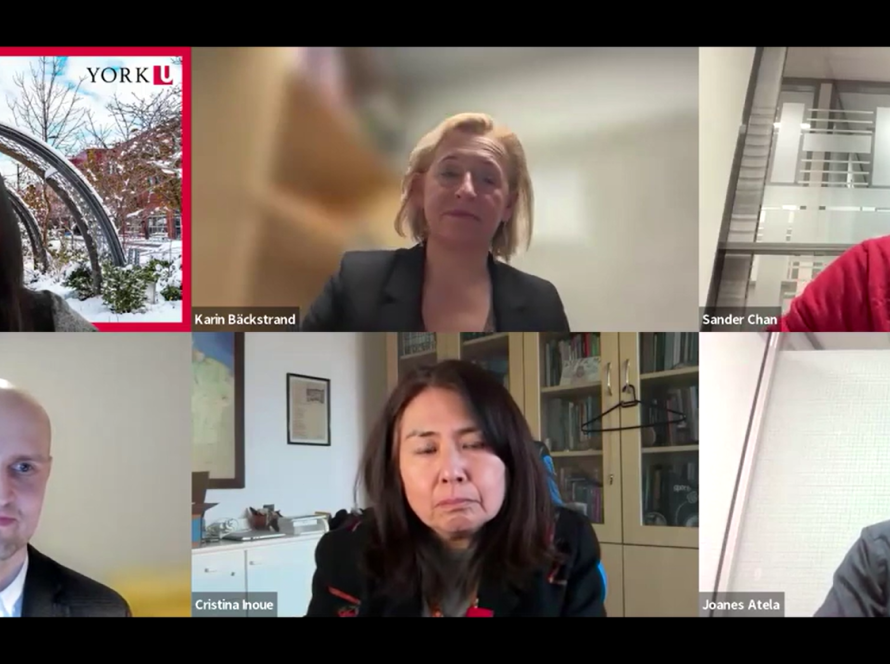
At COP30, an event held at the German Pavilion on 17 November marked the launch of a white paper that emanated from dialogues hosted by United Nations Environment Programme (UNEP) in the last months on strengthening synergies across the Rio Conventions. The event at the German Pavilion presented and officially launched the white paper emerging from these dialogues, outlining an action plan and pathways for aligning efforts across climate, biodiversity, and desertification agendas organized around three pillars: 1. Integrated Planning and Policy Coherence, 2. Financing Synergistic Implementation, 3. Coherent Monitoring and Reporting.
An opportunity for renewed collaboration
COP30 has been framed as an “implementation COP”, with the host country’s emphasis on moving away from talk to action. This year, the COP Presidency’s plan to accelerate solutions explicitly recognizes the importance of synergies. It also puts emphasis on nature, justice, and the recognition and inclusion of Indigenous Peoples.
At the panel discussion, it was noted that progress on synergies has been more substantial within the CBD and UNCCD, while the UNFCCC has seen slower movement. Momentum that existed over a decade ago has waned. COP30 in Belém has reopened space for renewed collaboration. With nature placed prominently on this year’s climate agenda, COP30 presents a pivotal opportunity to advance the synergies agenda.
The pivotal role of science
Any discussion of synergies must include the science-policy platforms. The Intergovernmental Panel on Climate Change (IPCC), the Intergovernmental Science-Policy Platform on Biodiversity and Ecosystem Services (IPBES), and the new Intergovernmental Science-Policy Panel on Chemicals, Waste, and Pollution (ISP-CWP) are pillars for authoritative policy guidance informed by the best science.
Yet, both environmental and societal responses must be guided by the best available science in an age where these responses must be deeply interconnected. This requires progress along four priorities.
- Inclusivity across the fields of knowledge. Science-policy platforms initially focused on geophysical and biophysical sciences. Over time, the IPCC expanded to include social and economic dimensions, as well as adaptation and vulnerability. IPBES, from its inception, aimed to integrate diverse knowledge systems to inform conservation and sustainable development. For meaningful alignment across science-policy bodies, it is essential to also include the humanities, and Indigenous knowledge systems. This broader integration offers a fuller understanding of the climate–nature relationship and supports stronger collaboration across the conventions.
- Relevance of the science-policy platforms for levels of governance and actors. Science-policy platforms must provide evidence-based guidance not only to national governments and intergovernmental processes, but also to local and regional stakeholders for guidance for strengthening and scaling up action that is responsive to context-specific complexities.
- Alignment with finance. Finance is the engine of synergy. The Global Environment Facility already plays a key role, but coordination across conventions remains fragmented and underfunded.
- Institutional collaboration across the Conventions. There is an opportunity to revive and expand the leadership of IPCC, IPBES, ISP-CWP, and the Rio conventions to ensure that science and policy move together across conventions and disciplines, and have continuity over time.
How transdisciplinary partnerships can help
At the BioCAM4 research consortium, we work on integrating biodiversity in climate change adaptation and mitigation for the planet, people and human health. We work on governance for nature, climate, and people. We study worldwide trends in the actions of a wide range of actors and stakeholders. We work on deep-dive studies to understand the context-specific complexities, needs and opportunities through our partnerships in East African and Central American regions. We engage the International Environmental Agreement processes for policy guidance to strengthen joint efforts to address the interlinked challenges through comprehensive, coherent, and aligned governance. We stand ready to provide expertise and support the collective effort to strengthen multilateralism and the science-policy interface.
About the author
Idil Boran (pronouns she/her/they/them) is professor of applied environmental governance in the Department of Philosophy and Faculty Fellow at the Dahdaleh Institute for Global Health Research at York University in Toronto Canada. Additionally, Idil Boran holds an associate research affiliation (non-resident) with the German Institute of Development and Sustainability (IDOS). At York University, between 2021-2024, Professor Boran served as the Associate Director of CIFAL York, the International Training Centre for Authorities and Leaders based at York University affiliated with the United Nations Institute for Training and Research (UNITAR). Specialized in interdisciplinary research and cross-sectoral outreach and partnerships, Boran is passionate about the science-policy interface and has followed the UN Climate Change process since 2012, holding side events bringing together researchers, practitioners, and policy makers. Idil Boran is the lead researcher and project director of the international consortium BioCAM4 – Biodiversity Integration in Climate Adaptation and Mitigation Actions for Planet, People, and Human Health funded by the New Frontiers in Research Fund, The German Research Foundation (DFG), and UKRI.
About BioCAM4
BioCAM4 is an international research consortium bringing together scientists, policymakers, and community partners to advance knowledge on nature-based climate action. Through global mapping, regional deep-dive studies, and policy engagement, the project explores pathways that deliver co-benefits for biodiversity, human health, and local livelihoods. The project is coordinated by the Dahdaleh Institute for Global Health Research (York University, Canada), with consortium partners, the German Institute of Development and Sustainability (IDOS – Germany), Institute of Zoology (United Kingdom), Radboud University (Netherlands), Tropical Agricultural Research and Higher Education Center (CATIE, Costa Rica), African Research Impact Network (ARIN – Kenya), and Greater Virunga Transboundary Collaboration (Rwanda). BioCAM4 is funded by the Government of Canada’s New Frontiers in Research Fund (NFRF) (Grant number: NFRFI-2023-00225), Deutsche Forschungsgemeinschaft / German Science Foundation (DFG), and UKRI’s Economic and Social Research Council (grant no: ES/Z000092/1).
This post was originally published on our Climate, Nature & People Substack.
Photo by Neil Palmer/CIAT